

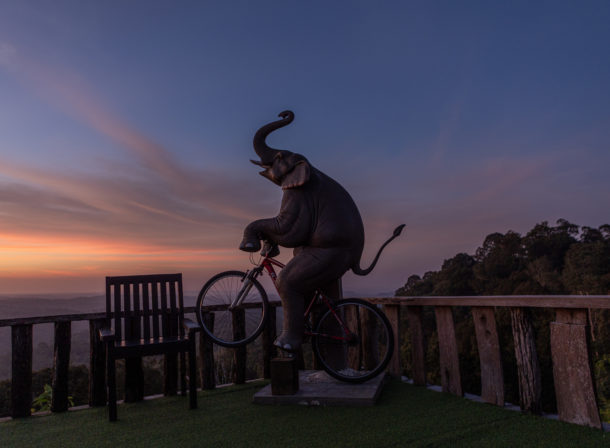
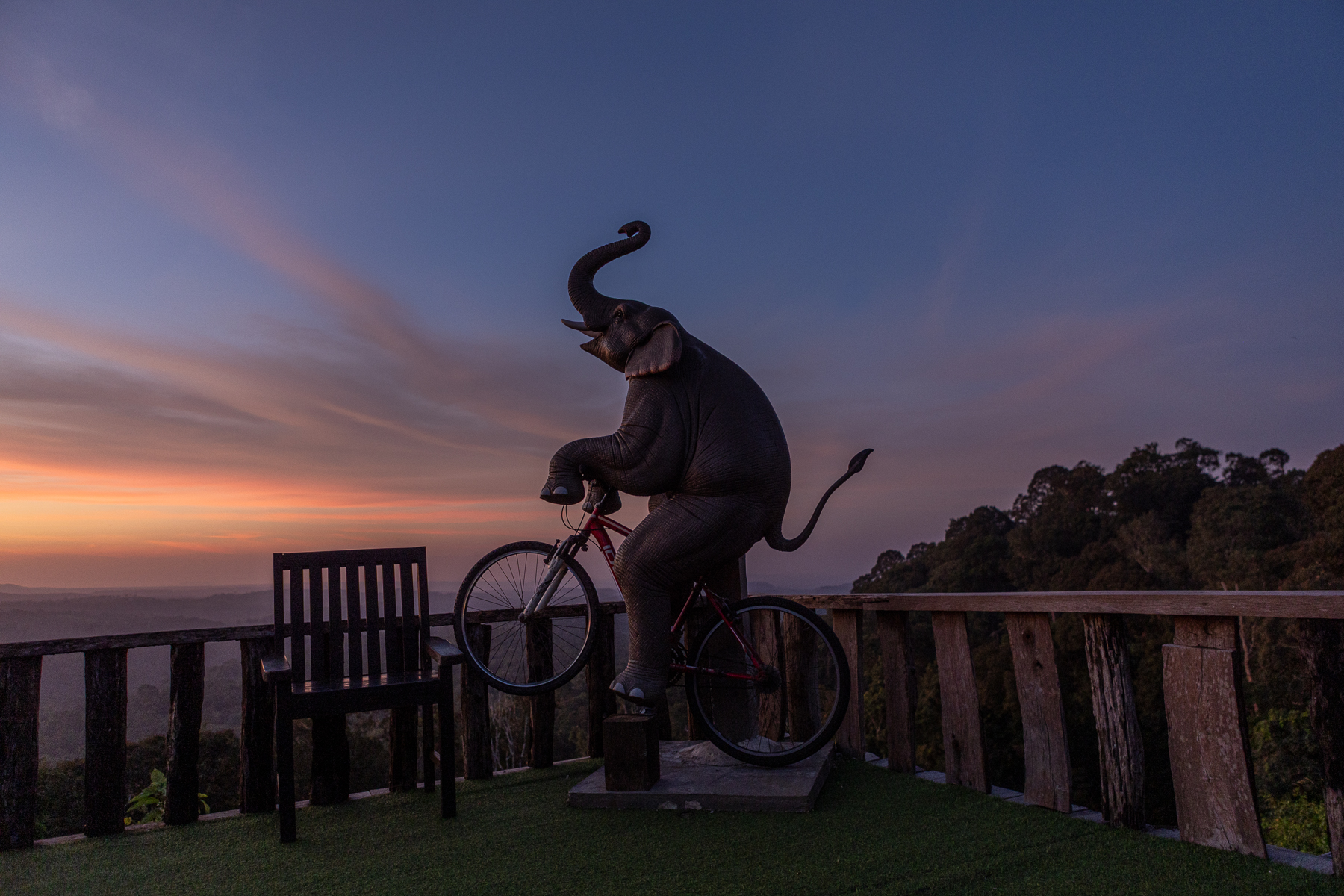
We had just started walking when an elephant appeared, silently, around the bend of the trail. It looked at us for a few seconds, then melted back into the forest. A fleeting but powerful encounter. Among the Bunong, it is said that the elephant carries a human soul. A social animal, it lives under the guidance of a matriarch, the central figure of the group. Nadia, who believes in signs, saw this face-to-face encounter as a form of silent blessing—as if the forest itself whispered to us: "Keep going, you are on the right path." It was not long after that we met Heng.
Heng remembers the little girl she was when her mother and brothers, accused of witchcraft, were slaughtered before her eyes. She was eight years old. She fled into the forest, barefoot and in rags, surviving on roots. "Strangely, I felt safe," she says. "The forest adopted and protected me. If anyone saw me, they thought I was a zombie and ran away. Everyone knew that 'the witch's daughter' lived there. I inspired fear; no one dared approach me—not even the Khmer Rouge. I felt good. I felt at peace."
Among the Bunong, souls are not reserved for humans; trees, rice, jars, elephants, and buffaloes are also imbued with them. Today, Heng dedicates most of her time to protecting nature from predators. "The forest is my friend, my savior, my home, my nurturing mother. When I want to meditate, that’s where I go. People tell me I’m not for progress and that I’m shrinking in my convictions. But it’s the opposite—I thrive in my convictions. It’s the rich who narrow their horizons. The Chinese want to buy our land to build casinos, hotels, and exploit the precious stones—rubies, emeralds, blue zircon—found beneath our soil. Foreign companies want to deforest to plant rubber trees, banana trees, or worse, launder their dirty money." The day the Bunong are driven from their land and rice fields, their only sources of life, soul, and sustenance, they will be swallowed by the machinery of globalization.
"If we disappear, our customs, beliefs, way of life, connection to nature, and sacred lands where we pray and bury our dead will fall into oblivion. The Bunong are the last custodians of an ancestral culture that is purely oral. It’s to prevent this from happening that I fight." She has turned her home into a headquarters. The phone never stops ringing. Heng speaks with her lawyer, friends, and fellow activists. "I’ve just been warned that tomorrow they will come to take me to prison." The reason for this impending arrest? Organizing a sit-in last month on the sacred land of Raddan Hill to protest the purchase of four hectares by a close associate of the Prime Minister. It’s night. It’s getting cold on Heng’s terrace overlooking the Mondolkiri jungle. Her supporters arrive by bicycle, tuk-tuk, and motorbike to organize a counter-offensive over steaming tea. Heng remains serene. "I’m not afraid. I constantly receive intimidating calls and death threats. Our problem is that we don’t have property titles. It’s not part of our culture." The stakes are so high that activist associations based in Phnom Penh, led by lawyers, doctors, and legal experts, are fighting for the survival of this community, which considers it crucial to preserve traditions so they can be passed down. They defend themselves as best they can: organizing protests, occupying land, and chaining themselves to bulldozers sent to ravage the forest in order to protect their cemeteries and places of worship. Heng knows it’s a battle between the iron pot and the clay pot, but she also knows her duty is to stand firm despite the constant intimidation and death threats she receives. Heng knows the fight is unequal, but she continues. The forest saved her once; today, she wants to save it. Against the bulldozers and threats, she counters with memory, dignity, and the voices of her ancestors. As long as there remains a voice to sing to the spirits of the forest, a hand to sow the sacred rice, then all is not lost. The land still speaks, and Heng listens.

















C’est un travail remarquable ; les photos sont exceptionnelles et les témoignages très enrichissants.