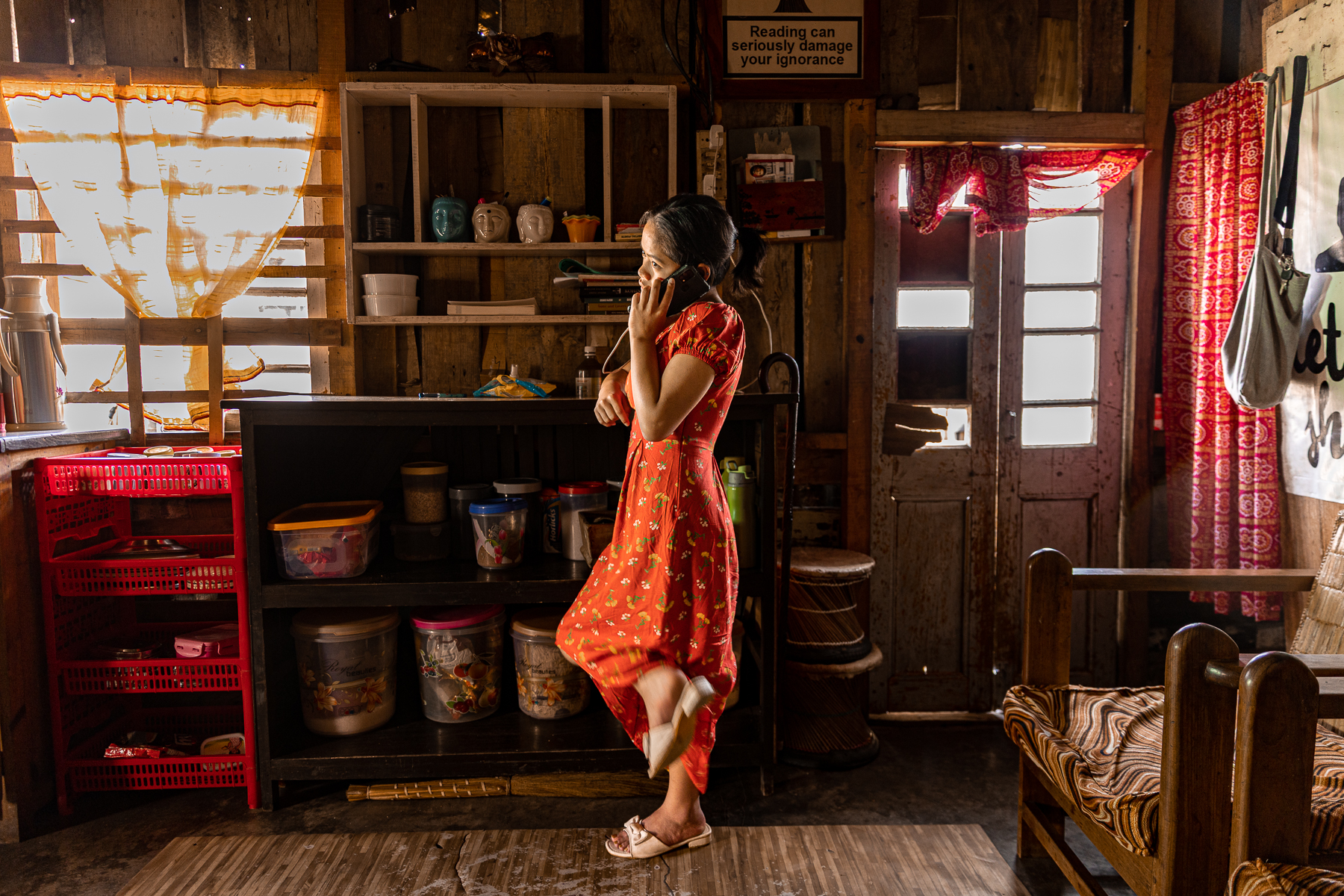
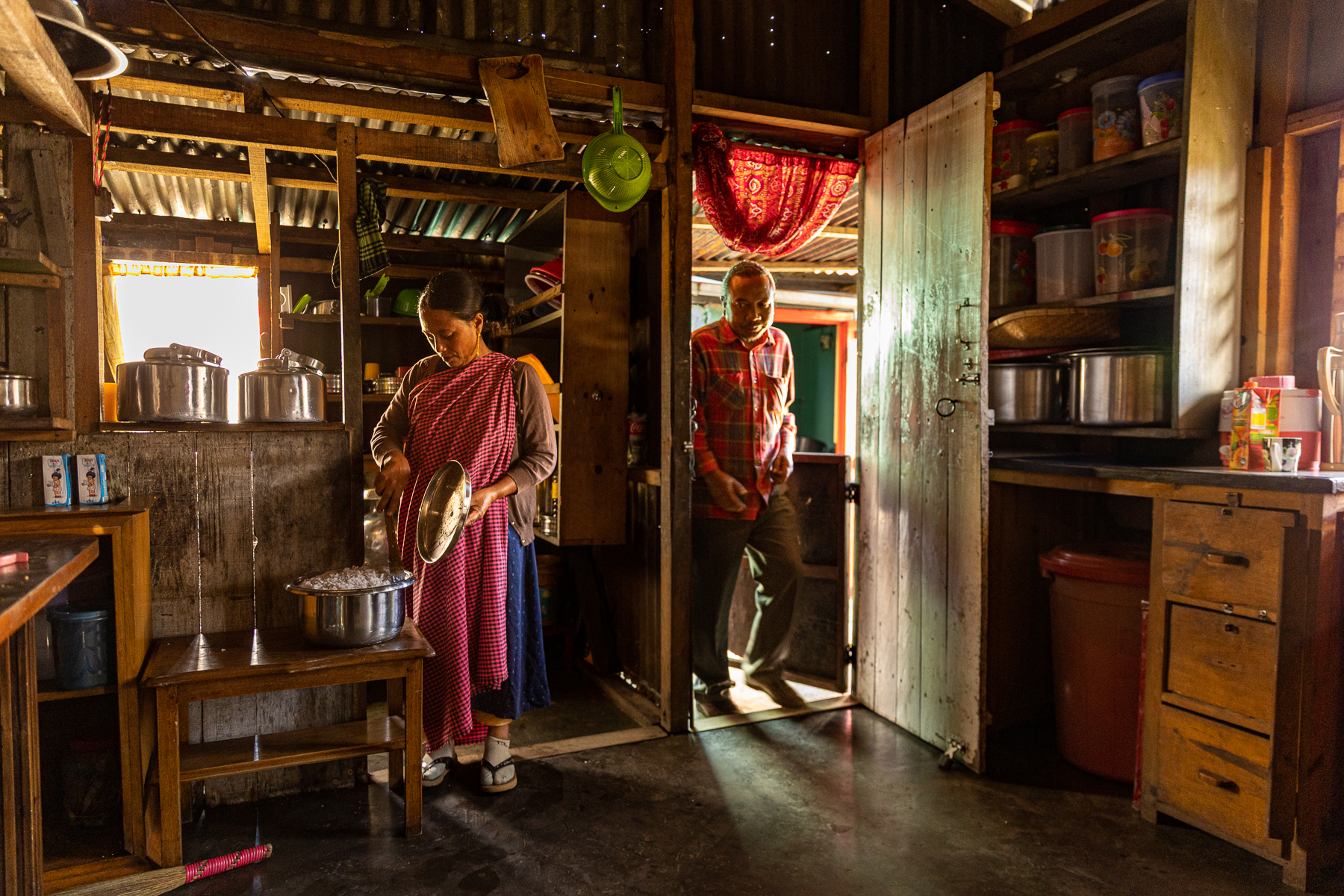
The Navajo reservation, the largest in the Americas covers over 71,000 km2 and remains the largest land area retained by an indigenous tribe. Since 1923, it has expanded over three states: Arizona, New Mexico and Utah. It functions as a sovereign nation with its 300,000 citizens, its own president, assembly, legal sytem and police. With houses built from recycled materials, the difficult access to drinking water and electricity for half of the population, rampant unemployment, the Navajo Nation is fragile. Its economy is based on the extraction of raw materials (petroleum, coal and, in the past, uranium) entrusted to companies leasing concessions; it largely depends on federal subsidies.
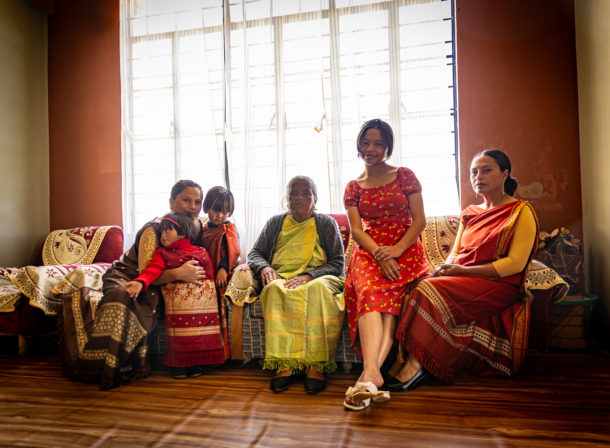
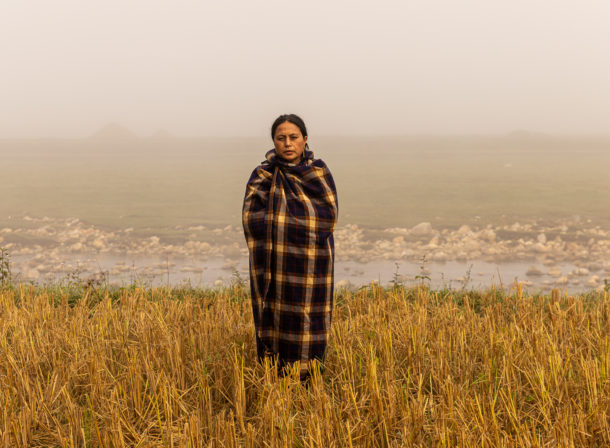
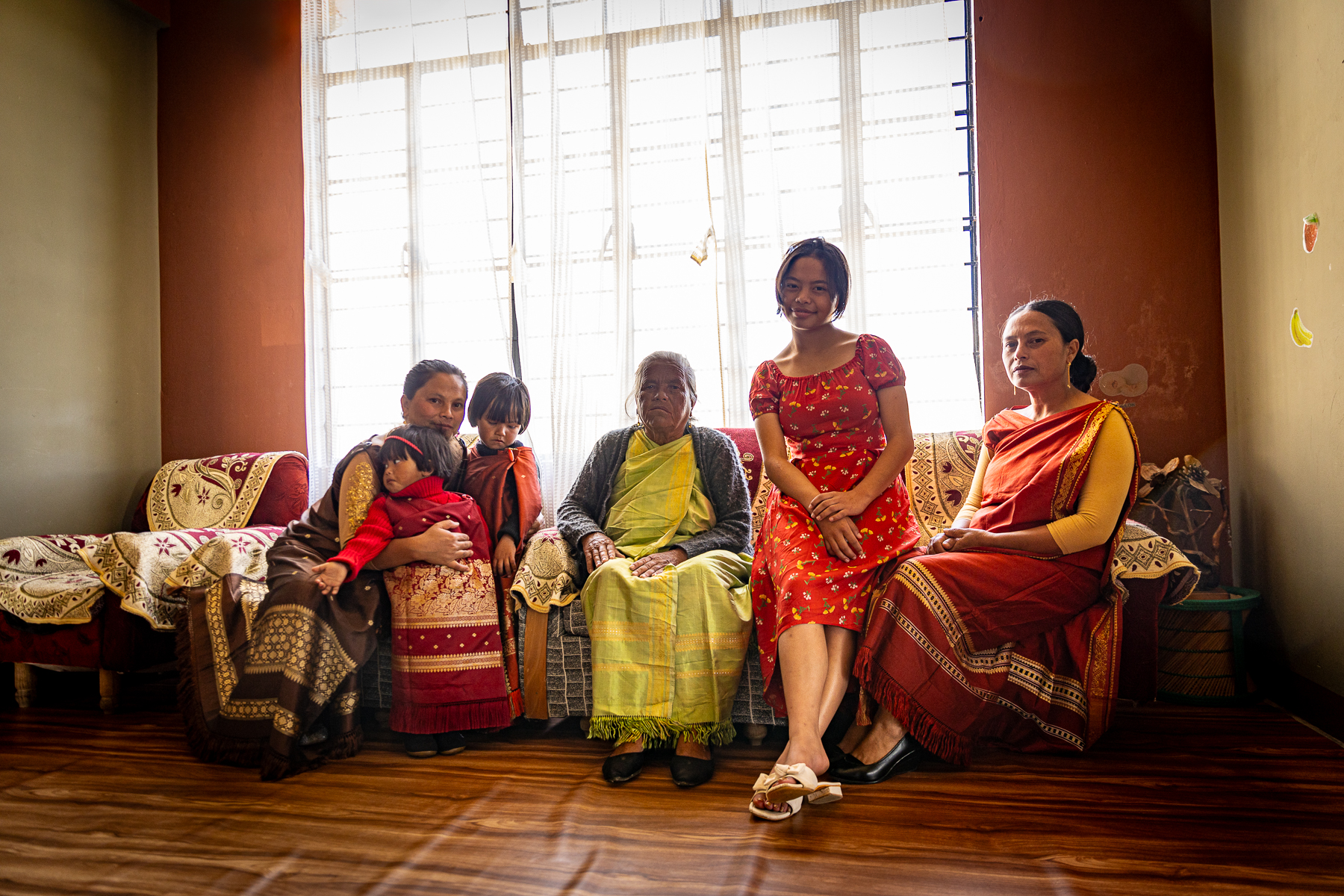
Women are the backbone of Navajo society, based on a matrilineal structure. Name and clan membership are passed down from the mother. A child’s identity is defined by affiliation to four clans: that of the mother for that of the father, then that of the maternal grandfather and the paternal grandfather; the clans of the two grandmothers are not mentioned since they are also those of the mother and the father.
Women own the house, passed down from mother to daughter. In the event of a debate around important issues, the oldest woman is the one who always takes the final decision, even if the one who embodies the authority and brings the child back on the right path is the maternal uncle.
There are four sacred mountains on the four cardinal points of Navajo territory - Sisnaajiní, Mount Blanca to the east, Tsoodzil, Mount Taylor to the south, Dook’o’oostííd, Mount San Francisco, to the west Dibé nitsaa and Hesperus in the north. In the center of the territory an encircled mountain symbolizes the meeting of the feminine and the masculine, of Father-sky and Mother-earth, home to equilibrium, appropriateness, unity and beauty, all words for which the Navajo have a unique expression: hozhó.